
5 Star Rated Service
Supported 1,000+ Directors


Business Loans

 5.0
5.0

Written by Jake Dye
Jake Dye heads our Business Loans division with over 5 years of commercial finance experience, focusing on unsecured lending solutions for small and medium-sized enterprises. Jake has built strong lender relationships across the SME sector and has a track record of placing funding for businesses ranging from early-stage companies seeking their first facility to established operators looking to fuel growth and expansion.
Commercial loans for UK businesses
Whether you’re taking your first steps with a new business, looking for funds to grow or want to boost your working capital, we can help you find the right commercial loan. We work with more than 50 UK lenders and know who to approach to secure business loans with the best terms and rates for every client.
Applying for a business loan can be daunting, which is why we handle the process for you. Just tell us what you’re looking for and we’ll use our knowledge of the lenders and their products to get you the best quotes. We can even write the loan application on your behalf. There’s also no fee for our service, either upfront or after the loan has been agreed.

What is a business loan?
A business loan is a funding solution between a lender and a business, where the lender provides an agreed sum of capital that the business repays over a set period. Lenders can include high street banks, challenger banks, and a wide range of specialist alternative finance providers.
Business loans vary considerably in their structure, terms, and purpose. Some are short-term facilities designed to manage cash flow gaps, while others are arranged for larger investments such as expansion projects or capital expenditure. Loan amounts, repayment schedules, and interest rates are typically determined by factors including your trading history, monthly turnover, business credit profile, and the purpose of the finance.
There are several different types of business loan product available in the UK market, including unsecured business loans, secured business loans, the Growth Guarantee Scheme, and revolving credit facilities. Choosing the right type depends on how much you need to borrow, how quickly you need access to funds, and whether you have assets you are willing to put up as security.
At UK Business Finance, we work with a panel of over 45 lenders to help you find the most suitable loan product for your circumstances. We manage the entire process on your behalf, from identifying the right lenders to submitting your application and keeping you updated at every stage.
What are the different types of business loans?
With a wide range of business loans on the market and products designed for different needs, it’s not always easy to know where to start or who to approach first. You can access short-term and long-term loans, loans for emergency funding, growth projects and start-up finance. You also have to consider whether a secured or unsecured loan is a better fit for your business.
Then there are the lenders to consider. As well as the high-street banks and building societies, there are also lots of independent and online lenders and many of those have their own niche. So, how do you apply for a loan that best suits your business needs? That’s where UK Business Finance can help.
How does a business loan work?
Whether you run a start-up or an established SME, most businesses need extra funds at some point to buy stock, invest in new equipment, expand their operations or improve their cash flow. Whatever your goal, there’s a loan out there to suit you.
You can borrow anything from £25,000 to more than £750,000 with repayment periods of several months to many years. There’s no one size fits all with a business loan, as the right deal for you depends on your specific needs.
Whatever business loan you go for, the basic process remains the same:
- You tell us what you’re looking for
- We search the whole market for the best quotes
- We recommend the best business loans based on those quotes (the interest rate, repayment terms and fees) and how they match your requirements
- We can write the loan application on your behalf - the lender will usually ask for financial information and run a credit check on the business and its owners
- If the lender accepts your application, you sign the loan agreement and the funds can be in your account within 48 hours
How much can I borrow with a business loan?
The amount you can borrow will depend on a number of factors, including your monthly turnover, trading history, and the creditworthiness of your business. As a general guide, unsecured business loans through UK Business Finance are available from £25,000 up to £750,000, with repayment terms ranging from three months to 72 months.
Most lenders calculate the maximum loan amount as a multiple of your average monthly revenue. This means that businesses with higher, more consistent turnover will typically be eligible for larger facilities. Businesses at the lower end of the eligibility threshold may find that starting with a smaller loan and demonstrating reliable repayment can open up access to higher amounts over time.
If you need to borrow more than £750,000, a secured business loan, where an asset such as commercial property is used as collateral, may allow for higher funding amounts. Our team can help you understand all available options based on your specific requirements.
Am I eligible for a business loan?
Your eligibility is key as it determines what type of loans are available to you. These are some of the things you can expect to be asked about when applying for a business loan:
- Revenue and profit
- Loan amount vs. turnover
- Bank statements
- Filed accounts
- Trading history
- Payments and credit history (e.g. late payments, defaults and CCJs)
All this information will help the lender build a picture of your business and determine how much risk you present and what an appropriate interest rate will be.
The most you can borrow is typically 10-20% of your annual turnover. However, many of the lenders we work with – including specialist lenders for businesses with a short trading history – are much more flexible than the banks.
If you have an adverse credit record, we can still help. These days, there are plenty of lenders who are willing to consider those with less-than-perfect credit records, and we know who to approach to find the best deals.
What can I use a business loan for?
One of the practical advantages of a business loan is that the funds can be used for a wide variety of needs, provided the purpose is legitimate and business-related. Common uses include:
- Managing short-term cash flow gaps
- Purchasing stock or raw materials
- Covering wages or payroll during a slow period
- Paying a tax bill: including VAT, corporation tax, or PAYE
- Funding a marketing campaign or business development activity
- Bringing on additional members of staff
- Paying supplier invoices promptly to maintain trading relationships
- Consolidating existing business debts into a single, manageable repayment
- Investing in equipment, software, or other business assets
Whether you need to cover a short-term shortfall or fund a specific growth initiative, our team can help you identify the most appropriate type of finance and connect you with a lender suited to your needs.
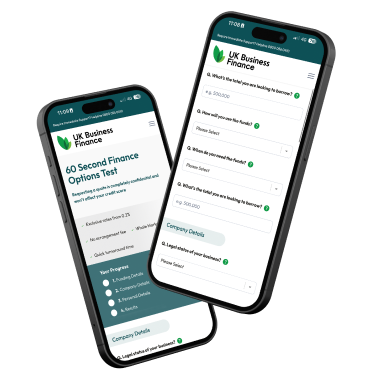
Find the right loan for your business
At UK Business Finance, there are no fees to pay for our service and we don’t ask you to sign a 30-day exclusivity contract like other brokers. Request a quote online or get in touch via phone or email to discuss your business funding needs.
Business Loan FAQs
Can I apply for a business loan as a startup?
Startups can apply for business finance, but it is important to have realistic expectations about eligibility. Many business loan products require a minimum period of trading, typically at least six months, along with evidence of regular monthly revenue. This is because lenders need trading data to assess whether a business can comfortably afford the repayments. Our team can help you understand what is realistically available at your current stage, and, if the timing is not quite right yet, what steps could put you in a stronger position to apply further down the line.
Why use a finance broker for a business loan?
Approaching a single lender directly limits you to whatever that lender can offer. UK Business Finance works with a panel of over 50 banks and specialist lenders, which means we can assess the whole market on your behalf and direct your application to the lenders most likely to approve it. Beyond the breadth of options, working with a broker means drawing on practical experience across a wide range of deals. We know which lenders suit which business types, how to structure an application effectively, and where the most competitive terms are likely to be found.
What is the difference between a business loan and asset finance?
A business loan and asset finance are both ways to access capital, but they work differently and suit different situations.
A business loan provides a lump sum that can be used for a broad range of business purposes, from managing cash flow to funding growth. The amount you can borrow and the terms you are offered will depend on your trading history, turnover, and credit profile.
Asset finance, by contrast, is a funding arrangement tied to a specific physical asset, such as machinery, vehicles, or equipment. The asset itself acts as security for the lender, which often makes it easier to access higher funding amounts at more competitive rates. Because the borrowing is matched to a specific purchase, it also keeps your working capital free for day-to-day operations.
What documents will I need to apply for a business loan?
The exact documentation required will vary depending on the lender and the size of the loan you are applying for. However, in most cases, you can expect to provide your business's most recent set of filed accounts, six months of business bank statements, full name, date of birth, home address, and homeownership status for all directors or shareholders providing a personal guarantee.
For larger loan amounts, some lenders may also request management accounts, a business plan, or financial projections. If you are applying for a government-backed facility such as the Growth Guarantee Scheme, there may be additional documentation requirements.
We will always let you know exactly what is needed before your application goes to a lender, so there are no surprises during the process.
What can I do to improve my chances of being approved for a business loan?
There is no guaranteed route to approval, but there are steps you can take to put your application in the strongest possible position before approaching lenders.
- Keep your business bank account in good order
- Make sure your filed accounts and financial records are up to date
- Be clear and specific about the purpose of the loan
- Check your business credit profile in advance and address any anomalies or errors
- Consider whether the loan amount you are requesting is proportionate to your turnover
Working with a broker like UK Business Finance can also make a practical difference, as we match your application to the lenders most likely to approve it.