


Chloe W

"Our business is thriving, thanks to UK Business Finance's loan. The team have been great."
Successfully Funding Thousands Of UK Limited Companies Since 1989
Require Immediate Support? Helpline 0800 056 0410

5 Star Rated Service
Supported 1,000+ Directors


 5.0
5.0

Jake Dye heads our Business Loans division with over 5 years of commercial finance experience, focusing on unsecured lending solutions for small and medium-sized enterprises. Jake has built strong lender relationships across the SME sector and has a track record of placing funding for businesses ranging from early-stage companies seeking their first facility to established operators looking to fuel growth and expansion.
Unsecured business loans can be an attractive option for asset-light businesses that need fast access to growth capital. Unsecured loans are a very flexible way to access the funding you need - and our brokers are here to help you navigate the market and find the right deal.
At UK Business Finance, we work with over 50 lenders and access the whole market to bring you the best quotes. Whether it’s an unsecured loan for a small business or an established SME, we guide you through the whole process and even write your loan applications on your behalf. Our services are also obligation and fee-free, so you can find the right deal for your business without paying more than you need to.
An unsecured loan allows you to borrow money for your business without having to provide an asset, such as property or machinery, as security. Instead, a lender will decide whether to approve the loan based on your trading history and the creditworthiness of you (sole trader) or your business (limited company). This makes it a fast and relatively simple way to get your hands on growth capital.
Typically, you can borrow up to £750,000 with an unsecured loan, so you can improve cash flow, purchase stock, invest in machinery or fund an expansion. You repay the loan at a pre-agreed interest rate in monthly or quarterly instalments over a fixed period. Unsecured loan terms are a short to medium-term funding option, with repayment terms typically ranging from three months to seven years.
If you run a startup or an early-stage business, you may not have enough of a credit record or trading history to get an unsecured loan. In that case, a secured loan or some other type of funding may be more appropriate.
The amount you can borrow will depend on several factors, including your monthly turnover, trading history, and the overall financial health of your business. As a general guide, most unsecured business loans start from £10,000 and can go up to £750,000 or more, depending on the lender.
Because there is no asset securing the loan, lenders tend to base their lending decision on your business’s creditworthiness.
Repayment terms are equally flexible. Depending on the lender and the size of the loan, you may be able to spread repayments over anywhere from three months to seven years, allowing you to find a monthly repayment that works for your cash flow.
If you are unsure how much you could be eligible for, our team can give you a clear picture of your options before you formally apply.
An unsecured business loan works in a similar way to most other term loans, you borrow a fixed sum of money and repay it, with interest, over an agreed period. The key difference is that no asset is required to secure the borrowing. Instead, lenders assess the creditworthiness of your business and, in most cases, the personal credit profile of the directors.
Because the lender has no collateral to fall back on, they will look closely at your trading history, monthly turnover, and your ability to comfortably manage repayments.
The process is straightforward. Once you get in touch, we gather the information lenders need, approach our panel on your behalf, and present you with the most competitive offers available.
The unsecured business loan market is very competitive, which means there are plenty of good deals out there if you know where to look. Other benefits include:
There are also a few other things to think about. The loan amounts are usually smaller with shorter terms and at higher interest rates than secured loans. You may also be asked to sign a personal guarantee, which could make you liable to repay the loan if the business is unable to.
In most cases, yes. Because an unsecured business loan is not backed by any physical asset, lenders need an alternative form of security, with a personal guarantee providing exactly that. By signing a personal guarantee, a director or business owner agrees to be personally responsible for repaying the loan if the business is unable to meet its obligations.
Whether a personal guarantee is required, and from whom, will often depend on the structure of your business.
Limited companies and LLPs
If your business is structured as a limited company or a limited liability partnership (LLP), lenders will typically ask for a personal guarantee from one or more directors or members. In many cases, anyone holding a significant shareholding may be asked to provide one.
Sole traders and traditional partnerships
For sole traders and those operating as a traditional (non-limited) partnership, the position is slightly different. There is no legal separation between you and your business, which means personal liability for any business debt is automatic. A formal personal guarantee is often not required as a separate document, because you are already personally responsible.
As the lender has no security, they will look at your business’s profile, including your trading history, turnover and credit record, to determine the risks. They may also consider your personal credit rating.
To be eligible for an unsecured loan, your business will typically need:
Lenders will usually calculate how much you can borrow as a multiple of your business’s monthly turnover. If you want to borrow more, you’ll also need a strong cash flow position and a balance sheet that shows you can comfortably afford the repayments.
One of the advantages of an unsecured business loan is that there are very few restrictions on how you use the funds. Unlike some forms of asset finance or invoice funding, an unsecured loan gives you the flexibility to direct capital wherever your business needs it most.
Common uses include:
Applying for business finance directly with a lender might seem straightforward, but it comes with a significant drawback: each application is typically limited to that lender's own products and criteria. If you do not meet their requirements, you may face a declined application.
Working with a broker like UK Business Finance gives you access to a wide panel of lenders. We know which lenders are most likely to approve your application based on your business profile, which means we can direct your application to where it is most likely to succeed.
We also help you prepare your application, handle the lender submissions on your behalf, and guide you through the process from initial enquiry to funds in your account.
A business operating within the media and audio sector approached us seeking a more effective way to manage its existing financial commitments.
Following a detailed review of the company's requirements and financial position, an unsecured business loan was recommended as the most suitable option.
Leveraging access to a broad panel of lenders, a funding package was secured that aligned with the client's objectives and cash flow needs. The business successfully obtained £250,000 in unsecured finance, allowing it to refinance existing debt into one manageable facility.
As a result, the company significantly improved its monthly cash flow, achieving a reduction in repayments of over £10,000 per month while simplifying its overall debt structure.
If you're ready to take the next step, we make the process straightforward. We work with a panel of over 50 banks and alternative lenders to find the most competitive unsecured loan for your business with no broker fees and no lengthy exclusivity contracts.
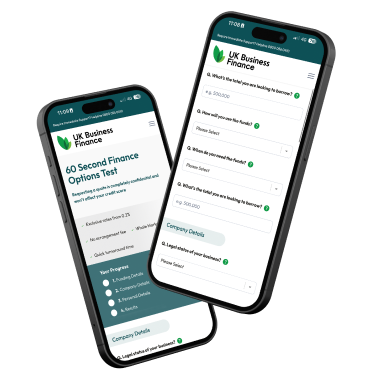
To get started, request a quote online and one of our team will call you back within 30 minutes. Alternatively, call us on 0800 056 0410 or email advice@ukbusiness.finance to speak directly with a specialist.
We typically need the following to progress your application:
Once we have what we need, we'll approach our lender panel on your behalf and come back to you with the most suitable options usually within 48 hours.

1. Get a customised loan quote
When you reach out to us, we will likely request that you provide the following information. Your latest set of accounts, previous 6 months’ banks statements and director’s personal details.
2. Compare loan options
Once the information from step 1 has been confirmed, we will reach out to our extensive panel of funders, who under normal circumstances, respond with an answer in 48 hours. After this, Know Your Customer (KYC) and identification checks will take place for the business and its directors.
3. Finalise the loan agreement
As soon as you agree to move forward with the terms and conditions, you will receive the relevant documents for you to sign and then return. After the final checks have been completed, the funds will be released. The time taken to release the funding varies depending on the funder, ranging from 24 to 72 hours.







100% Independent Broker
We're not tied to any lender. With access to 90+ finance providers, we match you with the most suitable funding solution, not the one that pays us the best commission.

Callback Within 30 Minutes
From the moment you contact us, we commit to responding within 30 minutes. When your business needs funding fast, every hour counts.

Nationwide Coverage, Local Expertise
With 8 regional offices and 100+ supporting locations across the UK, you'll work with a finance specialist who understands your local market.
Unsecured loans are well suited to businesses that need access to capital but do not have significant assets to offer as security, as well as businesses who would prefer not to tie assets to a borrowing arrangement.
They can be a good fit in several situations:
With a secured business loan, you offer an asset as collateral. This gives the lender security if the loan cannot be repaid, and in return they will usually offer lower interest rates and access to higher borrowing amounts.
An unsecured business loan, by contrast, does not require any collateral. Approval is based on the financial standing of your business and, in most cases, a personal guarantee from a director. This makes unsecured loans faster to arrange and more accessible for businesses without significant assets.
Which option is right for you will depend on your business circumstances, the amount you need to borrow, and whether you are comfortable using an asset as security.
While exact requirements differ between lenders, most will ask for a broadly similar set of documents to assess your application. You should typically expect to provide:
In some cases, particularly for larger loan amounts, lenders may request additional supporting information. Our team will let you know exactly what is needed before we submit anything on your behalf, so there are no surprises during the process.
Typical uses include taking on new staff, investing in equipment or technology, funding a marketing campaign, purchasing stock ahead of a busy period, or simply keeping day-to-day operations running smoothly during a quieter spell. Because no asset is required as security, you are not limited to financing a specific purchase, giving you the freedom to use the capital in the way that makes most sense for your business.
Focus on maintaining a healthy business credit score and keeping your personal credit profile in good order. Demonstrating consistent revenue reassures lenders that repayments can be managed. Having a clear sense of how you intend to use the funds, and being able to articulate this, also helps. Lenders want to see that the borrowing is purposeful and tied to a genuine business need.
Borrowing amounts vary depending on the lender and your business's financial profile, but as a general guide, most unsecured business loans are available from £10,000 up to £750,000. The exact figure a lender is willing to offer will be influenced by your company's credit history, how long you have been trading, and your average monthly turnover.
Having existing debt does not automatically rule you out. Many businesses carry some level of debt as a normal part of operating, and lenders understand this. What matters more is how that debt is being managed and whether taking on additional borrowing is affordable given your current financial position. Lenders will look at your overall debt picture as part of their assessment, including your credit score, monthly cash flow, and the ratio of your existing obligations to your income. If your current debt is being serviced reliably and your business generates enough revenue to support further repayments, there is every chance you could still qualify.

Chloe W
"Our business is thriving, thanks to UK Business Finance's loan. The team have been great."
Daniel B
"Thank you UK Business Finance for the quick and hassle-free loan process."
David L
"The team I deal with are professional and willing to finance vehicles that fit my requirements. I would recommend the company to any fellow Finance Directors."
Emily J
“We appreciate the support and trust from UK Business Finance in funding our business.”